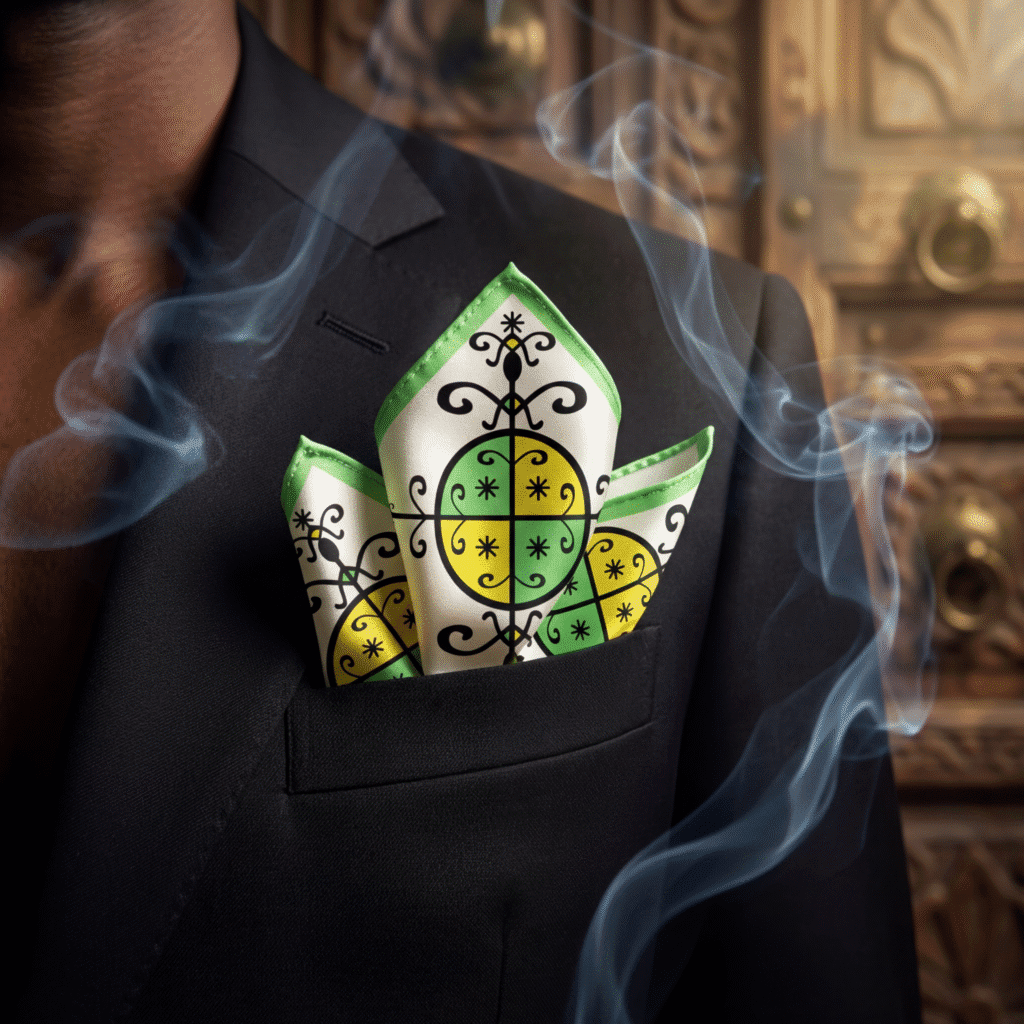
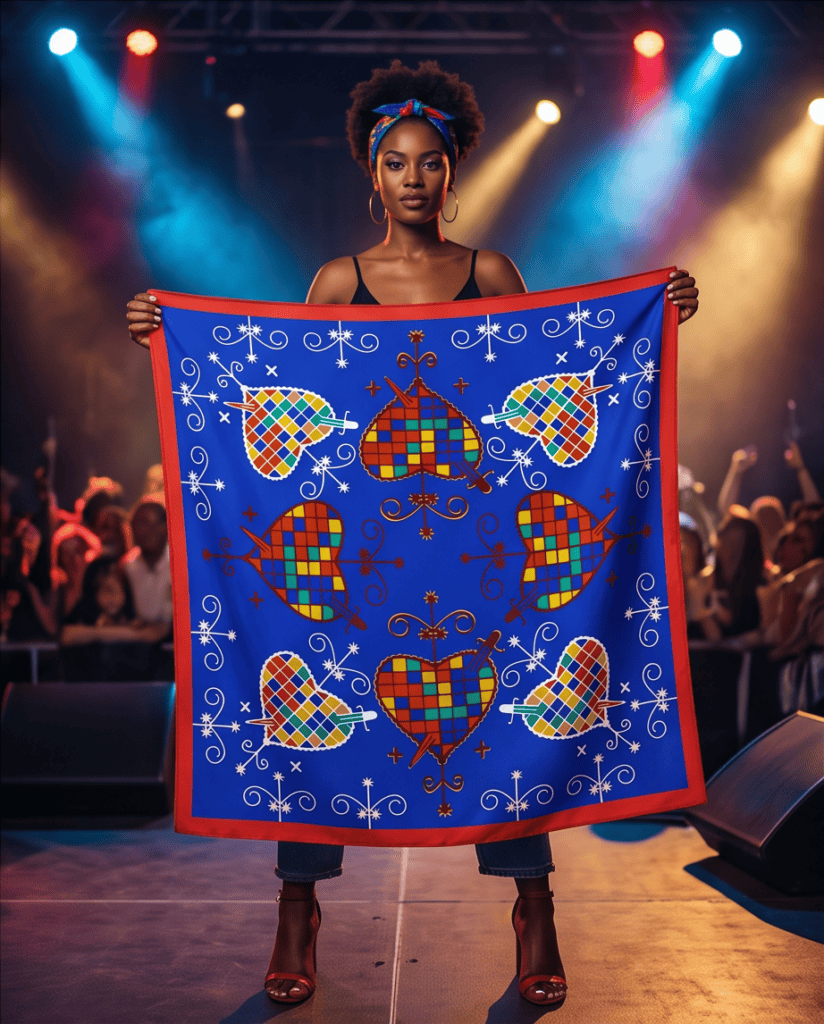
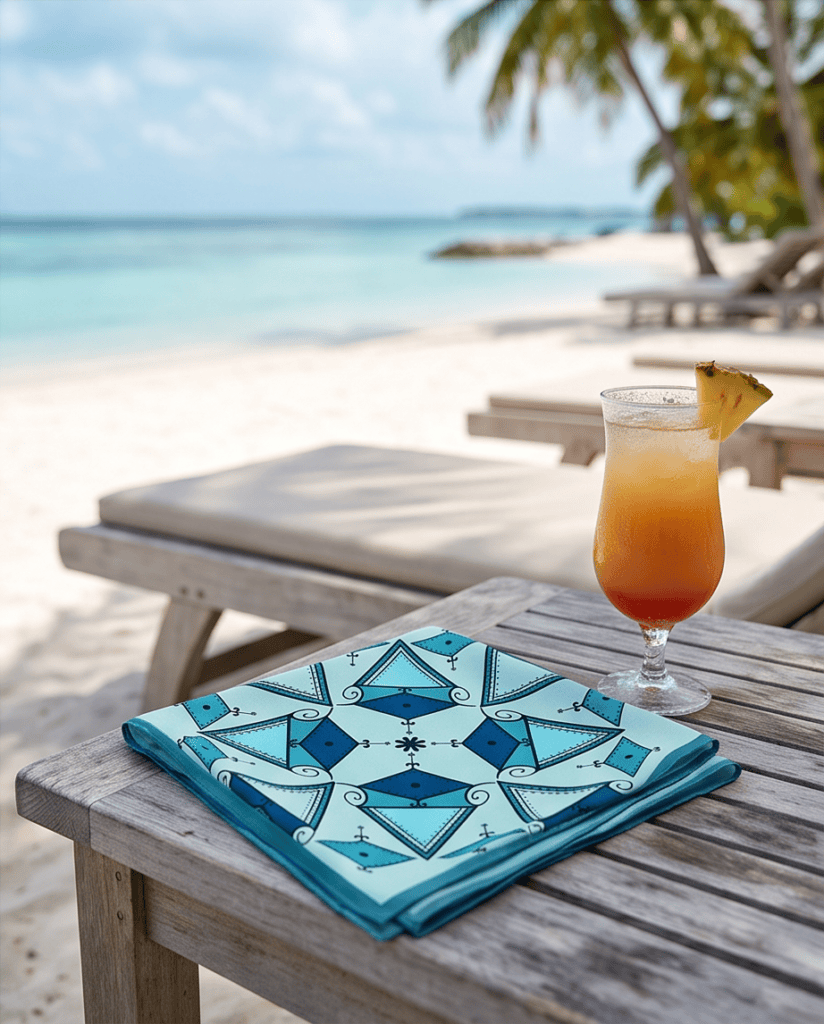
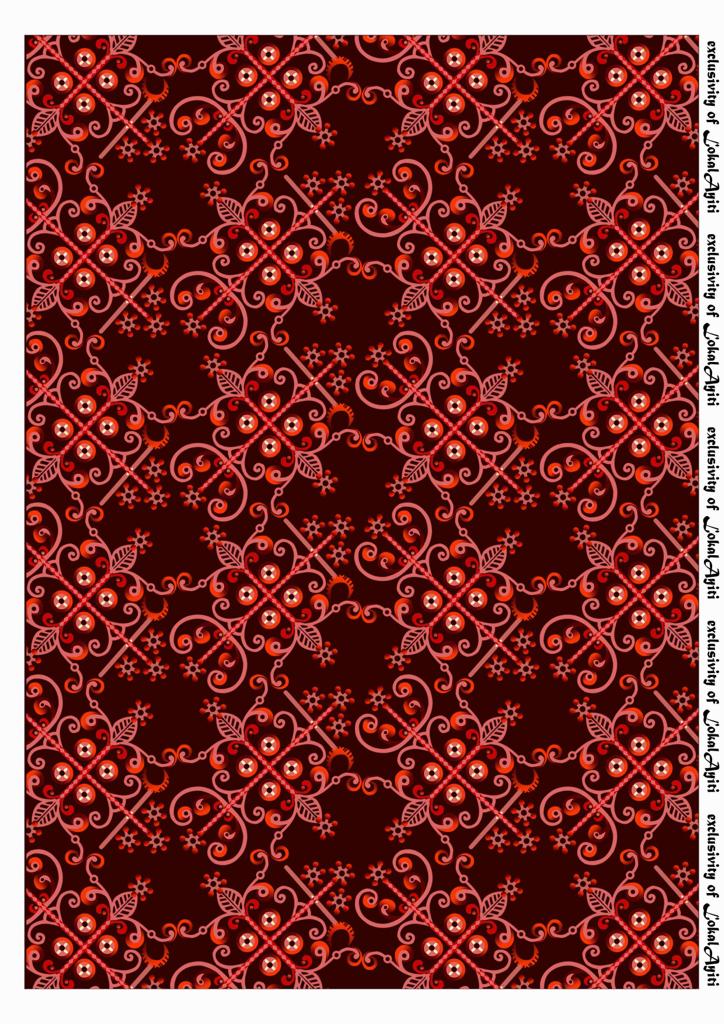
At LokalAyiti, we are passionate about vèvè and its role in Haitian culture. Our goal is to help people make an impact with their clothes by offering fabrics printed with vèvè symbols. Dismiss
Why Do Some Haitians Wear Symbols from Other Cultures More Than Their Own?
Foulards / Scarfs, Textile
Egypt, China, Africa, Asia, and other parts of the world — their symbols can be found everywhere today: on clothing, jewelry, accessories, artwork, statues, and home decorations.
Egyptian pyramids, scarabs, Chinese dragons, Asian characters, ancient deities, and other foreign cultural symbols have become popular elements of fashion and decoration.
But this raises an important question:
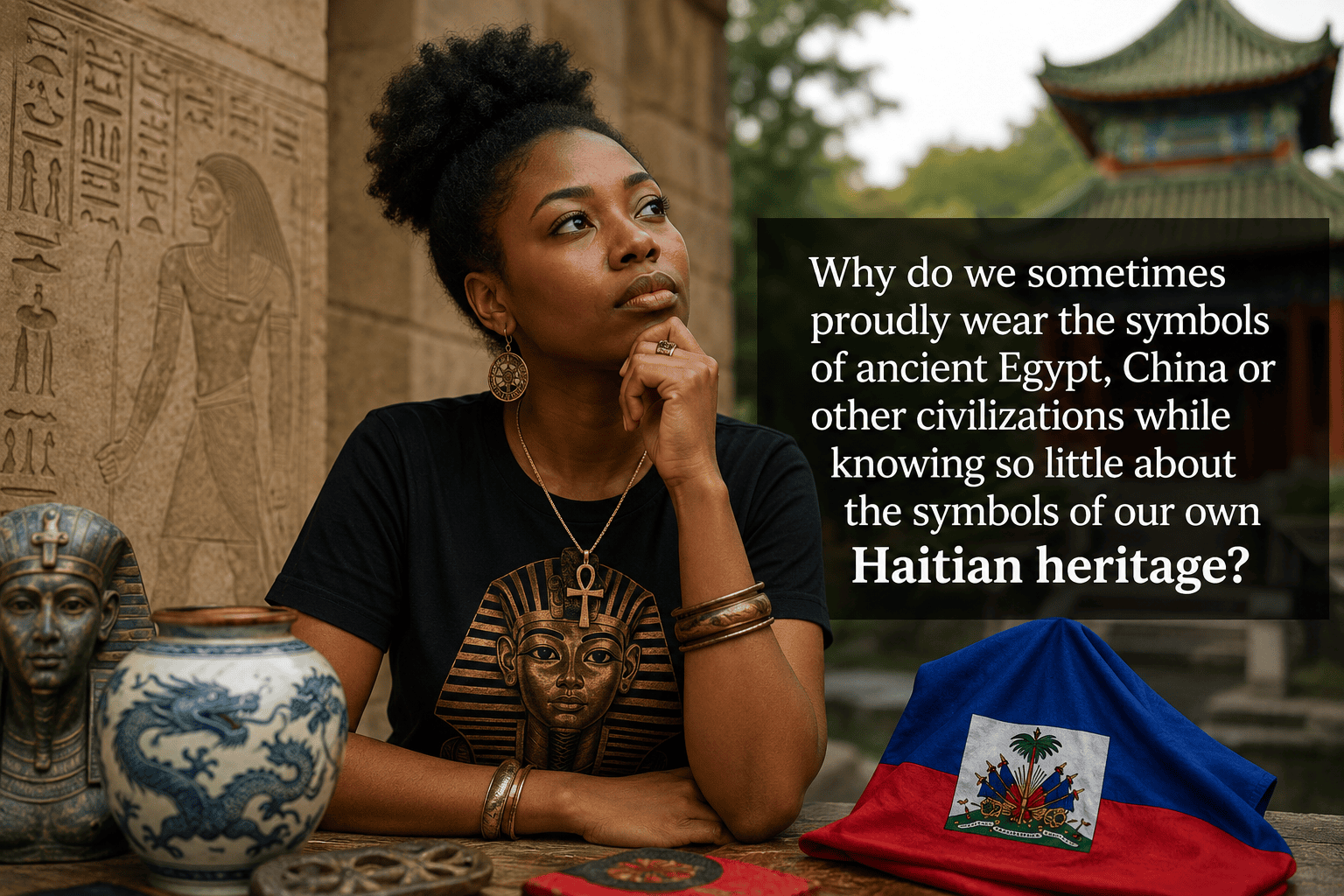
Why do some Haitians seem more comfortable wearing and displaying symbols from other cultures than symbols connected to their own heritage, particularly Haitian Vodou?
This question should not be used to criticize people’s individual tastes. Instead, it should encourage a deeper conversation about cultural identity, history, pride, and our relationship with Haitian heritage.
A Haitian Culture Rich in Symbols
Haiti has an extraordinarily rich cultural heritage. Haitian culture is the result of centuries of interaction between African, European, Caribbean, and American influences.
Haitian Vodou is an important part of this history. Its symbols, colors, vèvè, representations of the lwa, ceremonial objects, music, art, and spiritual traditions form a significant part of Haiti’s cultural heritage.
Yet many of these symbols remain underrepresented in contemporary Haitian fashion and popular culture.
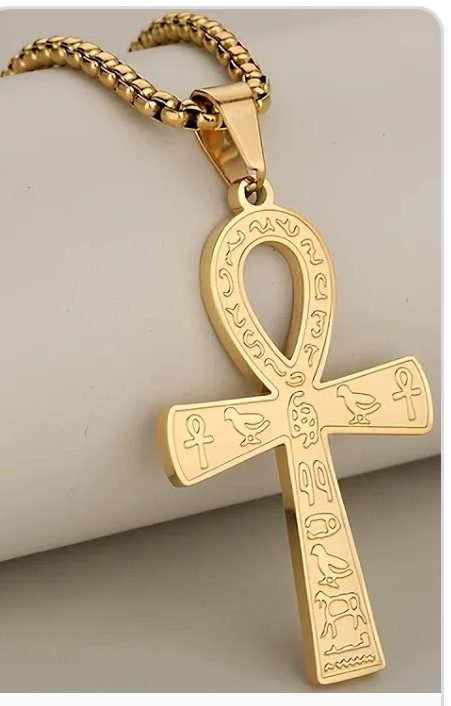
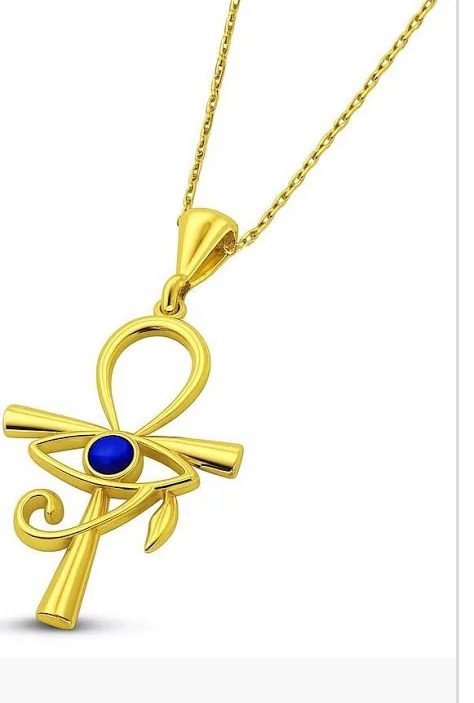
It is not unusual to see a Haitian wearing a necklace featuring an Egyptian symbol or another foreign symbol while knowing very little about the symbols associated with Haitian culture.
The problem, therefore, is not that Haitians appreciate foreign cultures.
The deeper question is whether we sometimes know more about the symbols of other cultures than we know about our own.
The Weight of History and Stigma
History has played an important role in shaping this relationship with Haitian culture.
For many years, Haitian Vodou was portrayed negatively in books, movies, religious discourse, and popular culture. It was often associated with fear, superstition, witchcraft, or mysterious practices.
These representations contributed to creating a certain distance between some Haitians and their own cultural heritage.
At the same time, symbols from civilizations such as ancient Egypt or China are often presented through museums, documentaries, books, films, fashion, and popular culture as symbols of wisdom, power, mystery, beauty, and historical achievement.
As a result, people may feel comfortable wearing an Egyptian scarab or a Chinese-inspired design because the symbol has been presented primarily as a beautiful cultural or historical object.
Meanwhile, a Haitian symbol may sometimes be viewed through a religious or negative lens.
This difference in perception deserves to be questioned.
Why Is the Foreign Symbol Sometimes Considered More “Beautiful”?
Imagine two necklaces.
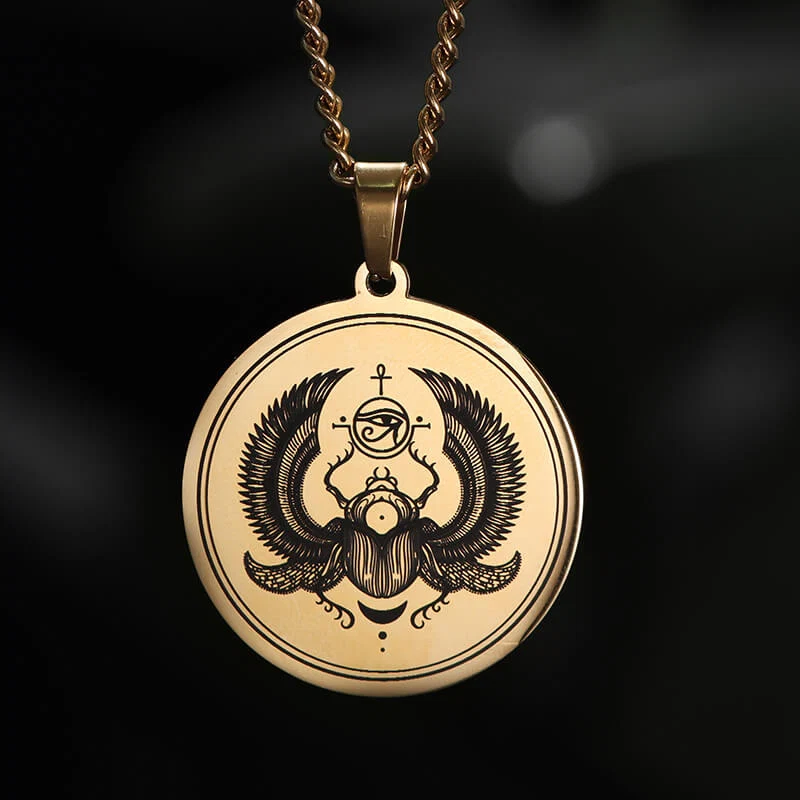
One features an Egyptian scarab.
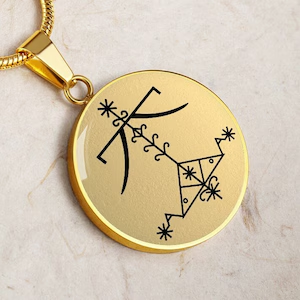
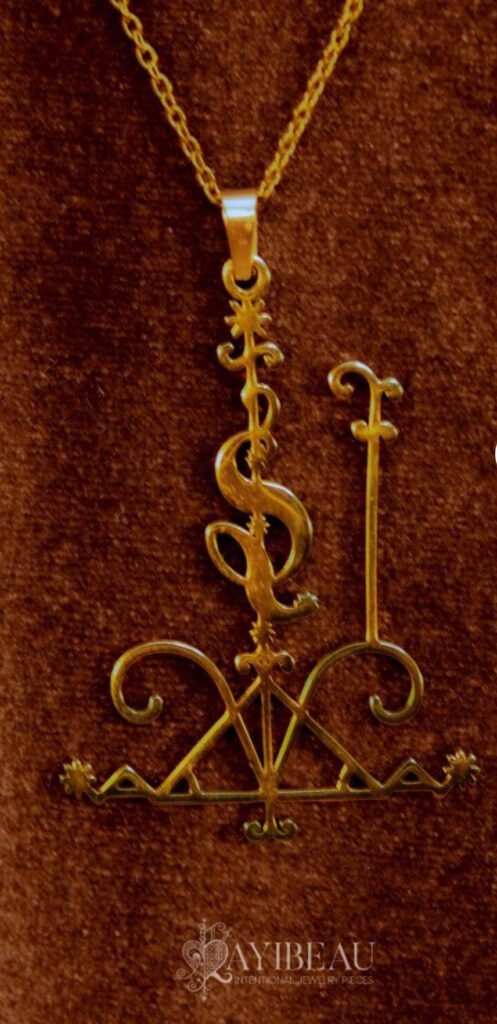
The other features a Haitian vèvè.
A person may choose the scarab because it looks mysterious, elegant, ancient, or powerful.
But why shouldn’t a Haitian feel the same pride when wearing a symbol inspired by Haitian heritage?
Why should a foreign symbol automatically be perceived as fashionable, while a Haitian spiritual symbol may sometimes be perceived as mysterious, dangerous, or inappropriate?
This is an important cultural conversation.
Fashion Has a Powerful Influence
Fashion strongly influences what people choose to wear.
International brands constantly borrow symbols from different civilizations and transform them into clothing, jewelry, handbags, tattoos, home decorations, and accessories.
Social media, celebrities, influencers, movies, and music then make these symbols even more visible and desirable.
Haitian cultural symbols, however, have not received the same level of international exposure.
This creates an interesting paradox:
We are constantly exposed to the symbols of other civilizations while many Haitian symbols remain largely absent from mainstream fashion and popular culture.
Perhaps the issue is not simply that Haitians prefer foreign symbols.
Perhaps the issue is that foreign cultures have become better at packaging, promoting, and commercializing their heritage.
Loving Other Cultures Is Not the Problem
It would be unfair to suggest that Haitians should not wear Egyptian, Chinese, African, Japanese, or other cultural symbols.
Cultural exchange is part of human history.
We can admire the pyramids of Egypt, appreciate Chinese art, wear African-inspired jewelry, study Asian philosophies, and celebrate cultures from around the world.
Appreciating another culture does not mean abandoning your own.
The real goal should be balance: discovering the world while understanding and valuing our own roots.
What If Haitian Symbols Became Fashionable?
Perhaps one solution is not to criticize consumers, but to create better cultural products.
Why couldn’t Haitian designers create modern collections inspired by Haitian heritage?
We could have:
Jewelry inspired by Haitian vèvè;
Necklaces featuring Haitian cultural symbols;
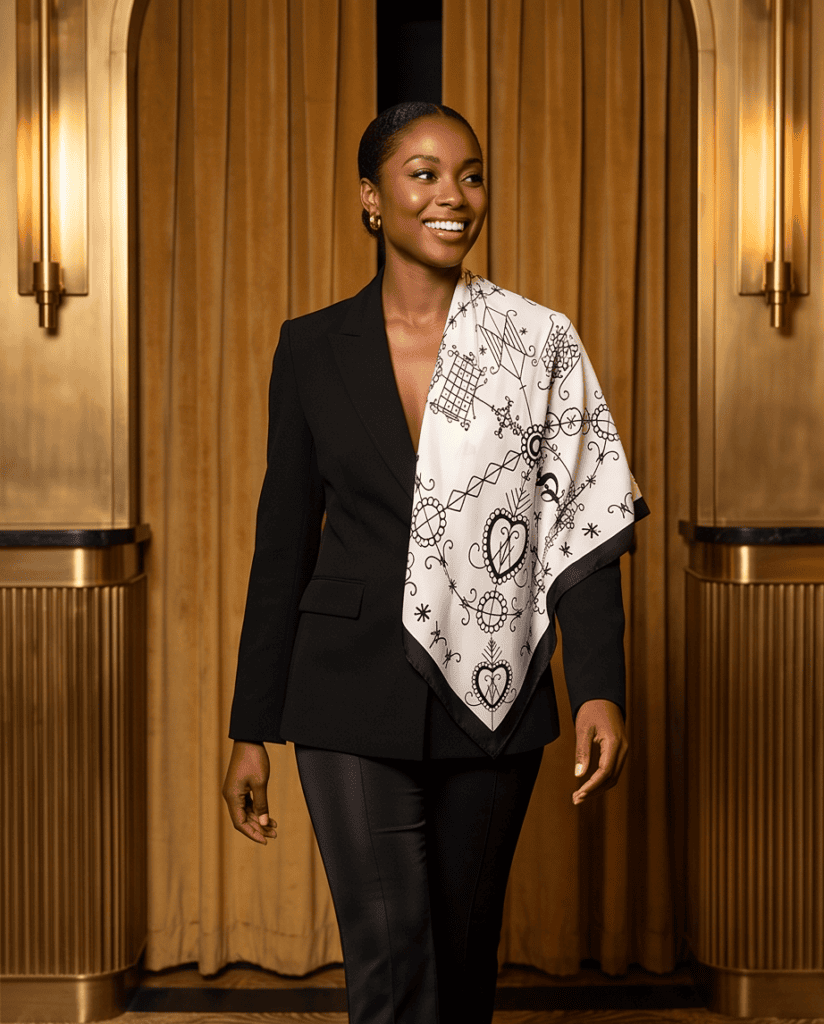
Scarves inspired by Haitian art;
Clothing incorporating traditional Haitian patterns;
Modern sculptures inspired by Haitian history;
Home decorations inspired by Haitian heritage;
Artwork representing Haitian cultural figures;
Contemporary fashion collections inspired by Haitian Vodou aesthetics;
Accessories that tell the story of Haiti.
The challenge is to transform cultural heritage into contemporary art and fashion without disrespecting or distorting its meaning.
Respect and Understanding Must Come First
There is also an important responsibility when using Haitian Vodou symbols.
These symbols are not simply decorative patterns. Many have religious, spiritual, historical, and cultural meanings.
Therefore, turning every sacred symbol into a commercial design without understanding its meaning can also be problematic.
Instead, fashion and art can become tools for education.
A piece of jewelry inspired by a vèvè could include information explaining its origin.
A sculpture could come with a short historical description.
A scarf could tell the story behind the symbol printed on it.
In this way, fashion becomes a form of cultural education.
Cultural Identity Begins With Knowing Who We Are
Ultimately, this conversation is about much more than jewelry or clothing.
It is about identity.
A society that understands and values its heritage is better equipped to pass that heritage on to future generations.
Haitian children should be able to recognize Haitian cultural symbols just as easily as they recognize symbols from Egypt, China, Europe, or other parts of the world.
They should know what vèvè are, understand the historical and cultural significance of Vodou, learn about Haiti’s artists and historical figures, and recognize the richness of Haitian creativity.
The Haitian Diaspora Has a Major Role to Play
The Haitian diaspora also has an important role in this cultural revival.
Haitians living in the United States, Canada, France, and elsewhere are surrounded by different cultures every day.
This can be a disadvantage if it leads to cultural disconnection.
But it can also be a tremendous opportunity.
The diaspora can create brands, organize exhibitions, produce jewelry, develop fashion collections, publish books, create documentaries, and use social media to introduce Haitian symbols to younger generations.
Imagine a generation of young Haitians proudly wearing modern designs inspired by their own heritage.
That would send a powerful message:
“I know the world, but I also know where I come from.”
Perhaps We Need to Change the Question
Maybe the real question is not:
“Why do Haitians wear symbols from other countries?”
Perhaps the better question is:
“Why haven’t we given our own symbols the place they deserve?”
The answer is probably a combination of history, stigma, globalization, fashion, limited cultural promotion, and sometimes a lack of knowledge about our own heritage.
But this can change.
We can admire the pyramids of Egypt while wearing Haitian symbols.
We can appreciate Chinese dragons while learning about the vèvè.
We can celebrate cultures from around the world without being ashamed of our own.
Our heritage should not exist only in history books and museums.
It can also be worn.
On a necklace.
On a bracelet.
On a scarf.
On a shirt.
In our homes.
In our artwork.
In our statues.
And most importantly, in our consciousness.
Celebrating Haitian culture does not mean closing the door to the rest of the world.
It simply means opening the door wider to our own heritage.
Knowing the world is a strength. Knowing your roots is another. True cultural confidence comes from having both.
Fashion is more than just a way to cover our bodies; it's a form of self-expression and a reflection of our cultural identities. With new advancements in technology and changes in society, the future of fashion is looking to be more sustainable, inclusive, and technologically advanced.
Sustainability is Key
The fashion industry has come under fire in recent years for its damaging impact on the environment. According to the Ellen MacArthur Foundation, fashion is responsible for 10% of global carbon emissions and 20% of global waste water. The industry also relies heavily on the use of harmful chemicals, with reports finding that fashion is the second largest user of water globally, and the third largest contributor to global pollution.
Consumers are now calling for change, demanding more sustainable and eco-friendly options. In response, fashion brands are starting to embrace sustainability, turning towards upcycled and repurposed materials, organic cotton, and innovative technologies such as waterless dyeing processes. These initiatives are helping to reduce the fashion industry's negative impact on the environment, and promote a more sustainable future for fashion.
Inclusivity is the New Normal
The fashion industry is finally catching up with the times and recognizing the importance of inclusivity. From more diverse runway shows to a wider range of sizes available in clothing, the industry is making strides towards creating a more inclusive future. Brands are also recognizing the importance of catering to a more diverse customer base, including those with disabilities. Expect to see more clothing that is adaptive, with features like Velcro closures and magnetic buttons, as well as clothing that is made with a wider range of body types in mind.
Technology is Changing the Game
The advancements in technology are having a profound impact on the fashion industry, changing the way we interact with fashion and introducing new possibilities for innovation. From virtual reality shopping experiences that allow customers to try on clothes without ever leaving their homes, to the rise of 3D printing in the production process, technology is transforming the fashion landscape.
Smart clothing is also on the rise, with pieces that can track fitness and monitor health. For example, smart sports bras can track heart rate and activity level, while smart jackets can track the wearer's location and send alerts if they wander too far from a predetermined safe zone. This technology is not just limited to sportswear either, as designers are starting to incorporate these features into everyday clothing.
The Power of Cultural Identity
Fashion has always been a powerful tool for self-expression, and the future of fashion is no exception. Brands are using fashion to celebrate cultural identity, with a focus on traditional techniques, textiles, and motifs. Haiti-based brand, Lokal Ayiti, is a great example of this. They celebrate Haitian cultural identity through the use of vèvè symbols on their fabrics, creating unique and meaningful clothing.
Conclusion
The future of fashion is looking bright, with a focus on sustainability, inclusivity, and technology. It’s exciting to see how the industry will continue to evolve and grow, creating new opportunities for self-expression and cultural celebration. If you’re looking for a brand that celebrates cultural identity, check out Lokal Ayiti. We use traditional Haitian vèvè symbols to create beautiful and meaningful clothing. Join the movement towards a more sustainable, inclusive, and technologically advanced future of fashion.